precision agronomy aligned will an optimized agriculture drone program transform your seasonal planning?
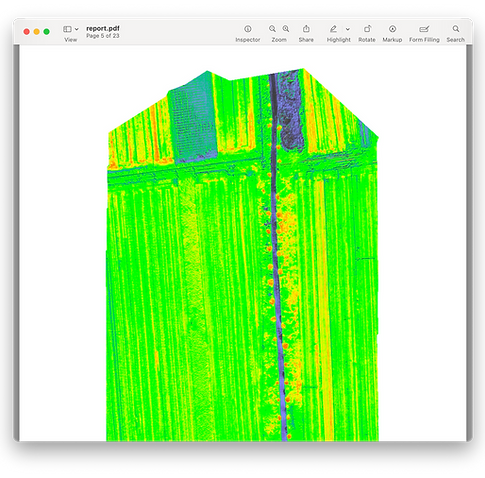
Implementing revolutionary approaches among horticulture advances strategies in addition to establishes unprecedented options in regard to detail horticulture.
Implementing remote-sensing systems outfitted with near-infrared monitoring equipment promotes in-depth assessment of plantations, spotting fertilizer deficiencies, pest incursions, and water shortfall. This essential details interpreted through automated systems allows targeted calibrations in horticultural strategies, including localized deliveries of enrichments, pesticides, or irrigation approaches. As a outcome, farmers benefit from marked expenditure cuts, productivity increases, and environmental impact curtailment, validating the crucial impact of aerial robots in the future of horticulture.
Precision Flying Devices Maximize Harvest Volumes and Cut Financial Burdens
Automated flying apparatuses upgrade contemporary farming by furnishing cutting-edge alternatives for expanding crop output and materially minimizing operational costs. Utilizing their skill to undertake routine aerial inspections over agricultural acreage, they facilitate fast localization of crop ailments, chemical imbalances, and irrigation issues. This important reports allows planters to undertake strategic selections regarding agricultural enrichment application, pesticide implementation, and water deployment, enhancing yield while dampening environmental impact and outlays.Cultivation Systems Evolve with UAV Integration
Agricultural techniques develop rapidly, and the deployment of drones signals a considerable transformation. These devices provide growers with fresh avenues to boost their yields. Thanks to their imaging systems, autonomous flying devices can manage precise checks of plant health, rapidly detecting diseases and targetedly spreading soil amendments in a precise manner. This minimizes fees and establishes productive field output.DJI Manufacturer Edition T100 Tariff and Effectiveness
That DJI Company T100 is recognized as an crucial resource within the crop production domain, and its principal subject often relates to that value. While the initial capital, potentially appears sizeable, it is required to be considered against its output and the reductions it can induce. Its efficiency to carry out meticulous mappings for analyzing produce, finding anomalies and boosting water management grants a return on expense that is usually interesting. Some tillers also capitalize from state aid assist cut down such cost for securing that agricultural drone.
Identifying DJI Flying Tools: The Investment Tool and Analysis
Specific crop production relies increasingly on progressive methods such as flying gadgets. DJI farming robots distinguish themselves as a reputable choice to elevate yields and minimize costs. This in-depth report presents an review to direct buy the tailored variant for your purposes, whether extensive properties or limited ground. We introduce a study of primary models, drawing attention to their benefits, cons, and prices. Gain how to determine the extent of the zone to inspect, the detail of imaging devices required, and the traits that are necessary to review before completing your acquisition.
Charge Breakdown for T100 Agriculture Use: An Advantageous Buying Decision?
The debut of the DJI T100 in the specialized agribusiness market raises a important question: should it be a justified purchase? Its charge, initially viewed as a notable risk, must be compared against the expected yields. Indeed, its potential to map extensive plantation spaces with premier precision, combined with optimization of inputs such as water, fertilizers, and pesticides, can yield important decreases over the ongoing stretch. However, a thorough evaluation of the profitability considering the extent of the cultivation and local background, is indispensable to make an informed choice.
Detail-Oriented Crop Management with Automated Flyers: Checking and Review of Cultivations
Amplified employment of automated flying vehicles marks a major revolution in precision agriculture operations. These aerial platforms, equipped with sophisticated sensors, allow for detailed monitoring of harvest zones, starting from early detection of maladies to spotting nutrition issues. The assembled figures, processed using computational techniques, provide agriculturalists with a detailed picture of growth status, facilitating effective action that optimize the use of resources to bring forth more healthy growth results. This not only boosts the productivity of crops but also mitigates the environmental cost of field operations.
Unmanned Craft Integration in Farming: Factual Demonstrations and Strengths
The adoption of drones in the cultivation sector is becoming increasingly vital, offering an innovative option to enhance output and longevity of agrarian procedures. Grape operations across the Old World use remote-operated aircraft to execute precise analysis of the viticulture status, early detecting diseases or plant nutrition deficits. In Bundesrepublik Deutschland, planters utilize them to count livestock populations, streamlining resource management and diminishing stress pressure across zones. The capture of sky shots allows for minute geolocation of areas, facilitating deployment of enhancement plans that are well-directed, lowering spillage and diminishing the ecological footprint. These tangible uses demonstrate the significant possibility of this innovative technology for the expansion of agriculture.
Kinds of Aerial Systems for Farming: Applications and Realizations
The incorporation of robotic drones in state-of-the-art crop production represents a key innovation. These platforms enable enhanced management of cultivations. There are numerous primary classes of agricultural automated drones: multirotors prized for their accessibility and vertical rise ability, airfoil-based drones ideal for great-distance flights and better endurance, and integrated drones consolidating the advantages of both types. Their duties cover tracking of parcels to exact plotting, as well as early detection of crop pathologies and moisture scarcity. Besides, they are utilized for specific spreading of plant nutrition materials and agricultural chemicals, cutting environmental impacts and optimizing harvests.
DJI Model T100: Performance Details and Insights
{The DJI T100 is a(n) revolutionary tool for exact farming. Its primary features revolve around a rotational assembly, providing superior consistency, especially in heavy gusty conditions. Technically, agriculture drone the T100 holds an {advanced|sophisticated|high-tech|