customer lifetime focused seamlessly integrated transparent conductor layers?

Throughout the domain of electronic technology,where compact units run through delicate conditions,rust amounts to a serious challenge to performance and dependability. To oppose this difficulty,groundbreaking remedies are always evaluated. A viable method is the application of acidified layers. Such tailored substances, designed with selective acids, reveal significant effectiveness against oxidization. When applied as a protective layer over electronic components, those sealants produce shields resisting moisture, gaseous elements, and corrosive materials, minimizing disruption and supporting maximal device function.
Electrical Film Linking Interfaces in Next-Gen Microcircuits
Throughout the innovative domain of cutting-edge electronics,calls for condensed and superior modules mount. Efforts to understand and apply pioneering components and manufacturing designs continue unabated. One such breakthrough lies in the development of conductive films, essential for bridging various microelectronic circuit components.
These films possess exceptional conductivity capabilities, facilitating seamless electron flow between device parts. Driving fast connections, they further the rise of minimized, state-of-the-art instruments
- On top of that, the coverings offer extensive favorable aspects.
- These sheets cover diverse textures promoting building of sophisticated device aggregates.
- In addition, these surfaces present notable toughness, protecting dependable parts activity in rough milieus.
Thermo-conductive Coatings: Elevating Heat Removal in Cutting-edge Systems
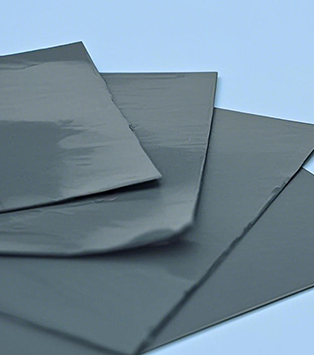
Inside modern devices, rapid thermal management is essential for high efficiency. Energetic tools customarily radiate massive heat liable to induce malfunctions absent regulation. Heat-transfer sealants develop as essential fixes, maximizing thermal emission and supporting device reliability. These specialized materials possess exceptional thermal conductivity, allowing rapid transfer of heat away from sensitive device areas.
Utilizing thermal conductive materials delivers significant perks. These products supply lasting, firm protection guarding environmental elements by preventing water, dirt, and toxin entry. Moreover, their bonding qualities provide strong, enduring attachment linking parts. The bendable quality enables movements, hindering stress gathering and harm occurrence.
Advanced Chip Enclosure Systems: Expanding Chip Packaging Limits
Mounting needs for compact, accelerated, and optimized semiconductor assemblies have motivated companies to pursue modern enclosure concepts. Within groundbreaking techniques, Plastic Die Stacking Module shows promise for delivering critical performance gains. Through combining multiple chip dies in one package, PDSM enables a compressed and dependable infrastructure for swift processing applications.
A central merit of PDSM lies in lowering package volume. Such miniaturization is especially valuable for use cases constrained by limited area. On top of that, PDSM configurations augment chip connectivity, making possible rapid signal flow and lesser delay. This amplified function deems PDSM appropriate for intensive sectors like AI models, high-end computing, and driverless frameworks
State-of-the-Art Corrosion-Proof Sealants for Tough Surface Scenarios
In demanding industrial settings where corrosive substances pose a constant threat,picking stable and sturdy barriers matters greatly. Extreme condition-proof materials establish roles as essential defenders for safeguarding vital structures and implements from harm. These protective agents integrate tailored polymers and auxiliaries granting exceptional resistance toward assorted acid, alkali, and corrosive components. These sealers show excellent bonding strength on various surfaces maintaining firm long-term connections in tough environments
- Leading-edge acid-resistant materials withstand continuous extreme heat, best for industrial temperature-intense applications.
- Such compounds provide remarkable dampness protection and sealing qualities, defending delicate devices from fluid harm and decay.
- Additionally, the compounds exist in assorted blends designed to address unique demands across various functionalities.
Lucent Current-Bearing Sheets: Facilitating Malleable and Transparent Instruments
Digital device fields are steadily changing, supported by growing market for compliant and translucent systems. Such advances happen because of needs for inventive techniques that combine harmoniously with everyday life. See-through conduction layers spearhead the change, delivering special blend of conduction and visibility. The films, typically formed with substances like indium oxide and graphene, assist in developing supple screens, interactive touch areas, and transparent circuits.
The Impact of Thermal Conductivity on Device Performance
Thermal flux measures critically shape whole device functioning. A high thermal conductivity allows for efficient dissipation of heat generated by components, preventing overheating. On the flip side, limited heat conduction raises temperatures, impairing operation sustainability.
- For example: Smartphones with high thermal conductivity materials in their designs tend to perform better under heavy usage
- Also, markets like aerospace engineering and automobile production rely on materials with prime heat conduction for thermally stressed parts
- In summary, recognition of thermal flux importance benefits developers optimizing device output, sturdiness, and lifespan.
Testing Sealant Attributes for Dependability in Electronic Cases
The performance of electronic enclosures hinges on the quality of the sealant used. Such substance functions as an important shield preventing exposure to external conditions, maintaining component soundness. To secure extended use, meticulous assessment of bonding capacity, endurance, and thermal traits of sealants is required. An exhaustive review aids in choosing materials fit to lower threats resulting from ambient deterioration.
Progressive PSDM Approaches for Upgraded Chip Package Assembly
Growing calls for elevated efficiency and compact packaging require establishment of fresh PSDM strategies. These innovative methods play a crucial role in optimizing the integration process, minimizing die-to-package bonding issues, and enhancing overall reliability. Cutting-edge progresses in PSDM integrate elaborate computative tools and procedures to reliably gauge system trends under numerous situations. The paper considers various progressive PSDM strategies, illustrating their impact on packaging enhancements.
- A major progression is stronger dependence on automated learning systems in chip package planning
- Also, growth in holistic simulation facilitates investigation of overlapping heat, mechanical, and electrical processes within devices
- Finally, the continuous evolution of PSDM techniques holds immense potential for shaping the future of chip packaging. Via enabling refined design improvements and cutting connection issues, these approaches foster enhanced, capable devices
Advanced Acid-Resistant Conductive Ink Technologies
The sphere of printed electronics ongoing develops, stimulated by calls for adaptable, light, and cost-saving components. A prime cause for this shift rests on innovative materials, mainly acid-sheltering conductive inks. Such formulations specifically brave fierce acid conditions, offering broad applicability across disciplines
- Acid-robust conductive paints empower crafting sensors functioning in deteriorative environments
- Such materials appropriately cater to industries like chemical treatment, where decay is problematic
- Besides, these inks support assembling elastic and translucent electrical routes
Outlook for acid-proof conductive inks remains positive, with transformative potentials expected in health sectors, pharmaceuticals, and energy harnessing.
Heat Dissipation Coatings in Power Circuits
Modules handling power tech face rising needs resulting from roles in electric mobility, renewable systems, and elite computing. {These systems generate significant heat, which can impact performance and reliability|Such assemblies produce considerable warmth that may affect device functioning and dependability|These circuits emit substantial heat risking operational efficiency and stability|The modules discharge serious thermal loads potentially influencing performance and robustness|These components develop notable heat threatening working effectiveness and reliability|The devices radiate PSDM important warmth which could impair functionality