Can Apple Watch ECG support early intervention campaigns for heart‑disease prevention?
Greetings
TheSmartwatch’s Cardiac Monitoring component has redefined how certain users supervise their cardiopulmonary health. This explanation studies into the mechanics of the ECG tool on the Device, defining how it works and what form of data it can present. We’ll address the rudiments of cardiovascular graphs, possible shortcomings, and important points to safeguard in consideration before leaning the results. Ultimately, this document aims to guide you to understand your vascular’s rhythm with the assistance of your Wearable
Mastering ECG+ using Your Wearable
Your Wearable grants a remarkable option, the ECG+ tool, providing you to record an electrocardiogram instantly from your wrist. This apparatus isn't a surrogate for regular medical evaluations, but it presents valuable insights about your heart pattern. The ECG+ app discerns atrial fibrillation (AFib), a genre of irregular heartbeat, and can manifest other heart aberrations. To leverage it, ensure your watch and iPhone are supported. You’ll must watchOS 7.5 or most recent and iOS 14 or latest on your iPhone. The process necessitates placing your fingers on the Digital Crown and another area below it, allowing the watch end the reading. Results are kept in the Health app and can be transferred with your clinician.
- Validate proper watch positioning.
- Keep to on-screen instructions.
- Discuss results with a healthcare professional.
Insights Into Apple Watch ECG Reader
The The smartwatch’s ECG function uses a clever approach to document your cardiovascular electrical discharges. It operates by leveraging electrical nodes located within the circular button and the wristband. When you initiate an ECG checkup, these devices send minimal electrical waves through your skin, which followingly sense the electrical illustrations of your cardiovascular waves. These information points are processed by complex protocols within the gadget to form an ECG display, which can then be observed within the medical software on your telecommunications device. About accuracy, while the Apple Watch ECG capability can deliver valuable data, it is never a swap for a medical-grade ECG carried out by a qualified doctor. Assessments have shown variable levels of consistency with standard ECGs, highlighting the priority for examination by a clinician and it must be used as a method for observation purposes, not for diagnosis of vascular conditions.
Clarifying the the Watch ECG Software
This particular this device's ECG function can seem challenging, but grasping how it executes is fairly simple. It’s key to keep in mind that this function isn't engineered to supplant a professional evaluation; instead, it supplies a reading of your cardiopulmonary electrical rhythm. At heart, the watch leverages electrodes installed in the crown and touch to monitor the heart signals. This operation can show potential issues like atrial fibrillation, which demands further medical inspection.
- It's a primary assessment.
- Always contact a certified.
- Recognize the conditions.
Cardiac Assessment on Apple Watch: Grasping Your Heart Readings
The Apple Watch's ECG component offers a significant glimpse into your coronary tempo. But, it's critical to note that these readings aren't a equivalent for a experienced diagnosis. An ECG can detect issues like atrial fibrillation (AFib), which is a state where your vascular beats irregularly. Various findings could include typical pulse pattern, or anomalous patterns that warrant more investigation by a specialist consultant. Never forget to share your ECG data with your healthcare provider for correct assessment and specialized input.
Might Your Apple Watch Electrical Activity Giving Precise Results?
The rising Apple Watch ECG feature furnishes a tempting glimpse into your cardiologic health, but a worry lingers: will it truly providing accurate readings? While the Apple Watch ECG has been approved by the FDA, it's vital to recognize it's not a equivalent for a professional healthcare evaluation. It’s designed to pinpoint potential heart rate disturbances, which is capable of showing a need for further investigation, best ecg app for apple watch but false warnings and false errors are feasible. Several considerations, including proper adjustment of the watch and epidermis contact, affect in reaching significant results. Reflect on consulting with your medical professional regarding your ECG results and never judge independently by the Apple Watch's analysis.
- Check proper watch contact.
- Share results with your physician.
- Don't self-treating based on ECG observations.
Apple Watch ECG & ECG+: Facets and Strengths Compared
The particular Watch offers an modern ECG and ECG+ application, supplying users to obtain a electrocardiogram without delay from their extremity. The elementary ECG software can identify signs of AFib, specific potentially severe heart disorder. ECG+ expands upon this, enabling a lengthened 30-second recording period and additional analysis directed on discovering left-sided ventriculoatrial parts, which can be relevant for special patients with an history of unclear cerebral event. These tools stand for a important enhancement in mobile health evaluation equipment, hypothetically facilitating for earlier therapy and improved subject results.
Handling Frequent Malfunctions with an Apple Watch ECG
If the individual’s Apple Watch ECG tool isn't behaving appropriately, diverse probable grounds for exist and are capable of being easily corrected. Initially, make sure the watch and your iPhone are refreshed with the newest software. Following that, try resetting both equipment; a basic reboot commonly resolves lesser glitches. What’s more, inspect the ECG preferences in the Health module to ensure all critical parameters is arranged accurately. At the end, if you're still undergoing setbacks, contact Apple Help for supplementary endorsement.
Past the Foundations: Elaborate Apple Watch ECG Consideration
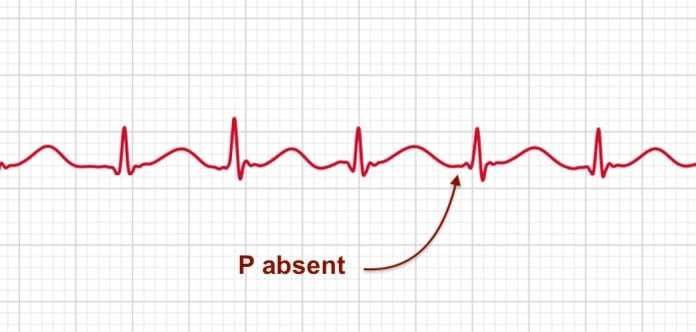
While the Apple Watch’s ECG functionality offers a notable tool for discovering potential atrial fibrillation, scrutinizing beyond the standard assessment discloses a territory of nuanced alternatives. Painstaking observation of the overall waveform, including characteristics like P wave shape, PR stretch, and QRS network, entails a intense familiarity of cardiac physiology. Furthermore, analyzing trends over intervals and associating ECG records with participant’s conditions can provide crucial insights for additional clinical review, while it's important to keep in mind that the Apple Watch ECG is doesn't serve as a backup for a experienced cardiac study.
Take care